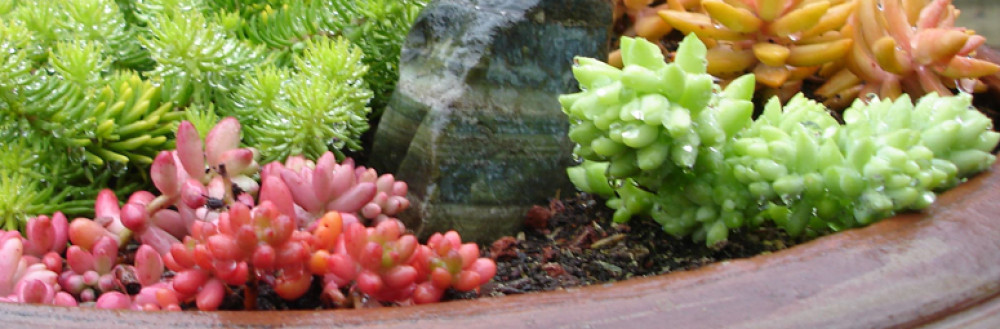
California’s Best Public Garden

My recent travels included an April Fool’s Day visit to the Huntington Botanical Gardens in San Marino (near Pasadena). I visited this extraordinary garden before, but not for several years, and was pleased that it continues to develop and to delight.

The Gardens, spread over 120 acres, include numerous thematic areas, several of which are “world-class” gardens: some oriented to geographical regions (Japan, China, Australia, etc.), some focusing on categories of plants (roses, palms, cacti & succulents, herbs, etc.) and others emphasizing garden-related topics (Shakespeare Garden, Children’s Garden, Jungle Garden, etc.) Something for every gardener!

One of my favorites, the Japanese Garden, was closed through spring 2012 for renovation. A nearby part of the world was represented, however, by the new Chinese Garden, “Liu Fang Yuan, the Garden of Flowing Fragrance,” which was opened in 2008. This a spectacular garden includes twenty-four poetically named features, e.g., Love for the Lotus Pavilion, Isle for Welcoming Cranes, and Bridge of Strolling in the Moonlight. Already fascinating for its specimen plants, architectural design and scenic views, it is still evolving with support from numerous donors.

My companions for the day, a Master Gardener and spouse from Tuscon, were most interested in the Desert Garden, which includes cacti, succulents and other zerophytes. It is unquestionably one of the world’s finest gardens of its kind, with specimens of more than 5,000 species from many continents. The garden began in 1907-08 with a half-acre of cacti and succulents from Mexico, and by 1981 grew to its present ten acres.

The Desert Garden includes sixty plant beds, with areas dedicated to Old World plants, North America, the low southeastern part of South America and South Africa.

One plant I found intriguing was the Chilean Puya alpestris, related to the young Puya berteroniana (“Blue Puya”) in my garden. This succulent produces “six- to ten-foot flowering spikes of metallic, deep turquoise flowers highlighted by vivid orange stamens in summer.” The Huntington’s large collection of these “otherworldly” plants was not in bloom during our visit, but it had numerous stalks with buds ready to open. Fortunately, there were many other plants in bloom for us to enjoy.

We also toured the historically oriented Rose Garden, which has nearly twelve hundred species and cultivars on display. Our visit was early in the season, but many roses were already in bloom, providing a generous sample of the species and hybrids of the much-loved rose.

There are other fine public botanical gardens and arboreta in California, but the Huntington Botanical Gardens is larger, more diverse and better maintained than any others that I have visited.

If the opportunity arises for you to visit the Los Angeles area, schedule at least a day to visit the Huntington Gardens.

More

The full name of this impressive resource is The Huntington Library, Art Collections, and Botanical Gardens. As the name indicates, the site includes

  • A research library of some six million rare books and manuscripts in British and American history and literature, including an exhibit hall where visitors can see such literary treasures as Chaucer’s Canterbury Tales, a Gutenberg Bible on vellum,  an enormous (“double elephant”) folio edition of Audubon’s Birds of America, and much more.
  • An extensive art collection, displayed in three buildings:
    • The Huntington Art Galley has on of the finest collections of European art in the nation;
    • The Virginia Steel Scott Galleries of American Art include American art from the colonial period through the middle of 20th century; and
    • The MaryLou and George Boone Gallery hosts changing exhibitions.
  • The Botanical Gardens, with their many thematic areas, over 120 acres.

There is much to see and appreciate. While you might visit “The Huntington” primarily for the gardens, include some time to see its library and art resources as well. Here is the link to The Huntington’s website, where there is all the information you will find useful.

A Rose by Any Other Name…

At least one gardener has been motivated by my recent recommendation to learn the botanical names of plants in your garden. Wendy in Monterey wrote, “We’d like to turn over a new leaf and start learning the names of our plants. Can you recommend a book that would help us—with color photos, scientific and common names, and maybe a paragraph about the plant. We live in Monterey CA and have a variety of shrubs, trees, grasses, perennials, annuals, and rocks! Many thanks.”

My immediate recommendation is to get the 9th edition of Sunset’s indispensable reference, The Western Garden Book. This very recent publication includes hundreds of additional plants and illustrates plants with photographs instead of line drawings.

Finding a good information source is just the first step toward progress. Here are three ideas to make learning plant names more enjoyable.

1. Understand how plant names relate to other plant names

Plant names include two basic parts: genus and species. For example, Ceanothus griseus is the name for the Carmel Ceanothus, a native of the Monterey Bay area and one of dozens of species within the genus Ceanothus.

A given species might include varieties. In this case, we have Ceanothus griseus, var. horizontalis, with the common name Carmel Creeper.

A species or a variety within a species might include cultivated varieties, called “cultivars.” These are natural variations that have been selected for propagation because of their desirable features. The Carmel Creeper’s cultivars include ‘Yankee Point’ (narrower leaves and darker blue flowers) and ‘Diamond Heights’ (yellow and green variegated leaves, pale blue flowers).

Every genus also exists within a family. The genus Ceanothus is one of more than 50 genera within the Buckthorn family (Rhamnaceae). A family relative of the Ceanothus is the Rhamnus californica, the California Buckthorn or Coffeeberry.

2. Accept the reality that plant names change.

Taxonomists change plant names on the basis of DNA analyses and other methods. They either combine or separate genera (or other categories). Our current example, Ceanothus griseus has been changed recently to Ceanothus thyrsiflorus var. griseus.

Changes reflect refinements, so don’t fret!

3. Appreciate the meaning of plant names.

Many plant names describe a plant’s appearance. The genus name Ceanothus comes from the Greek “keanothus,” that referred to some spiny plant, and the species griseus is the Latin word for “gray.”

Some plant names refer to the plant’s discoverer. For the plant Salvia karwinskii (Karwinski’s Sage), the genus name comes from the Latin salveo, “I am well,” and the species name refers to the 19th century German explorer Wilhelm Friedrich Karwinsky von Karwin.

There are several books on the derivation of plant names. An online source is Michael Charters’ website, “California Plant Names: Latin and Greek Meanings and Derivations (www.calflora.net).

More

I have just received my copy of Sunset’s 9th Edition of The Western Garden Book, and it doesn’t disappoint.

I have several previous editions of this very useful publication, so I could attempt a detailed historical analysis of its content, but I won’t because I prefer to address the here and now.

The section on Climate Zones has been expanded to include information for several western states. That broadens the market for the book, but I’m still most interested in the climate zone of my own garden and care little about what’s happening in New Mexico.

Every gardener should know the climate zone of his or her garden, the micro-climates within the garden and the composition of the soil.

The next section, called the Plant Finder, has lists of plants in three categories: Problem-solving Plants, Earth-friendly Plants, and Plants for Special Effects. These sections are valuable guides to the alphabetical list of plants (the book’s main section). Unless you already know the name of a plant, an alphabetical list can be frustrating. The Plant Finder helps the gardener find a plant for a given situation.

The last major section, Gardening, Start to Finish, provides brief landscaping and cultivation information. This is helpful, but a serious gardener will need more detailed information on these topics.

Finally, the book restores the index of common and botanical names. This index was missing from the previous edition, in favor of a novel approach to including common names within the main alphabetical section.

The new Western Garden Book is available through most bookstores, garden centers and Amazon.com (which has the best prices, as usual). I paid for my copy, so this brief review is unbiased, except by my previous reliance on this essential reference work.

Every serious California gardener’s library should include a well-read The Western Garden Book!

***

Tom Karwin is a Santa Cruz resident; a UC Master Gardener; a member of several garden groups; and board member of the UCSC Arboretum Associates.

Good Sense or Obsession?

Do you know the names of the plants in your garden?

Many gardeners don’t care about plant names, but knowing the names of those in your garden can be helpful.

The common names for plants are useful in the same way that all names are useful: they identify a particular person, place or thing: you can identify and refer to each plant with accuracy. Rather than saying “that plant with small red blossoms and fancy leaves by the birdbath,” you can say, “the geranium by the birdbath.” (Another common name for the geranium is “stork’s bill,” referring to the shape of the seed.)

More precisely, you could use the plant’s botanical name: “the Pelargonium sanguineum by the birdbath,” or, in the case of a hybrid, “the Pelargonium ‘Rozanne’ by the birdbath.”

Advanced info: the plant commonly called a geranium is really a member of the genus Pelargonium. The true geranium, also called a “hardy geranium,” is a member of the genus Geranium.

When a friend admires a blossom and asks, ““What plant is that?” and you know it only as “that small plant with small red blossoms and fancy leaves,” you can say, apologetically, “I don’t know,” or defiantly, “The name doesn’t matter, I only care that it adds color to my garden.” Either response won’t satisfy you or your friend.

Once you have identified a plant’s botanical name, however, you identify the plant for your friend, look up cultivation advice on the Internet, find in the plant in a garden book, or ask for it at a garden center. And tell the difference between a Geranium and a Pelargonium.

Most gardeners will have difficulty remembering the botanical names of all the plants in a large garden. Some will put plant labels next to the plants as memory aids. This practice can become a “time-suck” because labels fade, become buried or disappear mysteriously.

Also, for some gardeners, plant labels are intrusions on the garden’s natural appearance.

The non-label option is the garden map. This can be a simple sketch of the entire garden or (more commonly) each planting bed in the garden, with plants represented by shapes of various sizes, and with plant names by the shapes or on a numbered list. The simpler the sketch, the easier it is to keep current as plants are added, subtracted, moved or expired.

Several specialized drawing tools can be found on the Internet, either free or low in cost, to make more formal garden maps. Most are simple to use and handy for planning a vegetable garden, but they generate rather stiff-looking diagrams, rather than a picture of an ornamental planting.

Enjoy mapping your garden!

More

There are several software applications for planning and laying out an edible garden, and a few for designing an ornamental garden (not that veggies can’t be attractive!). Those vegetable garden planners that I’ve seen have excellent information and rather limited graphics. They work best for utilitarian projects, in which efficient use of space is more important than the visual effect.

If you want to plan an edible garden, take a look at this sample of software products (see others online by searching for “garden planner”).

Kitchen Garden Planner by Gardener’s Supply

PlanGarden by PlanGarden.com

Vegetable Garden Planner by Mother Earth News

A very good (perhaps the best) vegetable garden planner:

WikiGrow by LocalGrow

The best tool I’ve found for mapping an ornamental landscape is the following:

Garden Planner, Version 3.0 by smallblueprinter

This inexpensive application supports drawing an irregularly shaped planting bed (like mine), in addition to rectangular vegetable gardens, and representing plants with unique symbols. Mapping a large and full bed takes time, but this software makes the task much easier than using commercial graphics software, e.g., Adobe Photoshop or Illustrator (and much less expensive as well). I will post the result of my efforts in the near future.

So Many Books…

Gardening is a hands-on activity, but books about gardening offer relevant activity, whether for gaining useful knowledge, inspiring ideas, forming plans for the future, or just “gardening” until the rains let up. Here are two new books that publishers have sent to me for review.

***

The Beginner’s Illustrated Guide to Gardening: Techniques to Help You Get Started, by Katie Elzer-Peters (Cool Springs Press, 2012).

This book offers an excellent first step into the world of gardening. Anyone baffled by plant tags, seed packets, the hardiness zone map, or fertilizer labels need not remain puzzled: this book dispels such mysteries.

It also introduces beginners to gardening basics, lawn care, trees and shrubs, flowers, vegetables, and several other gardening topics.

Author Elzer-Peters has impressive credentials in horticultural studies and practical experience at several public gardens. After absorbing the basic ideas in this readable book, a new gardener will have a solid foundation for more advanced topics.

***

For more advanced topics, we have Wildflowers of Garland Ranch, by Michael Mitchell and Rod M. Yeager, M.D. (Revised 2011).

The two authors of this exceptional book are retirees with enthusiasm for and expertise on the wild flowers of the central coast. Many authors and publishers target vast areas in a hunt for a large readership, and sacrifice the relevance of the work for any given reader. The book is remarkable for concise descriptions and fine photographs of the wildflowers of a specific place, Carmel Valley’s Garland Ranch. It is a uniquely valuable resource for gardeners and nature lovers who reside or visit in the Monterey Bay area.

I reviewed the first edition this book about a year ago. This is the revised edition and enlarged edition with over 60 new flowers and many other updates. The authors now report that Garland Ranch is the home of over 500 flowering plants, shrubs and trees, or about 25% of all of the flowering plants of Monterey County. Garland Ranch offers great local opportunities for viewing wild flowers and this book is an invaluable resource for learning about the plants you see. Purchase at Garland Ranch, 700 West Carmel Valley Road.

This book is about “more advanced topics” not because it is botanically technical, but because the appreciation and identification of wild flowers is an activity beyond the hesitant initial forays into residential gardening.

The home gardener engages in an exercise for taming nature: taking plants from their native habitat and cultivating them in a contrived and managed setting. The gardener succeeds best when the garden closely resembles the plant’s original habitat.

The gardener’s preparation is enriched by study of wildflowers. Garland Ranch, with this book in hand, is a convenient and good place for such study.

Selecting Roses

If you have visited your favorite garden center recently to look at the roses, you might feel overwhelmed. There are so many different plants offered for you to plant that it is difficult to choose.

For example, McShane’s Nursery in Salinas (www.mcshanesnursery.com) has posted its current rose list, with scores of bush roses, plus groundcover roses, English roses, tree roses, and climbing roses.

When studying this list, don’t just click “print.” I did and now have a six-page list, a half-page of growing tips, and seventeen blank pages! This didn’t kill more than a very small tree, but it’s a waste nevertheless.

You can also become overwhelmed by browsing to www.regannursery.com, the website of Regan Nursery in Fremont, California.

Dealing with such rose lists or inventories you visit requires a strategy. Decide first on what you need or want for your garden (bush, groundcover, tree or climbing roses), so you could focus on plant selection.

The bush roses are basically hybrid teas and floribundas. Thousands of cultivars are available, with new ones on the market every year.

The English roses, also called shrub roses, are plants England’s David Austin has bred. He combines fragrant old roses (Gallicas, Damasks, Albas and others) with modern roses, e.g., hybrid teas and floribundas, which offer a wide range of colors and repeat flowering. These are deservedly popular plants. Check them out at www.davidaustinroses.com.

Tree, groundcover and climbing roses are I hope obvious.

Once the gardener has decided the category of rose wanted/needed, most will chose for blossom color. This is a not a bad approach, but it misses other interesting and productive strategies.

A different approach is to select a rose that is highly rated for overall performance. Look for such ratings in the American Rose Society booklet, 2012 Handbook for Selecting Roses: A Guide to Buying Roses (inquire at ars@ars-hq.org).

Another approach for the adventuresome gardener: collect uncommon species. Of the 100 species of the genus Rosa, the major ones are the white rose (R. alba), the dog rose (R canina), the cabbage rose (R. centifolia), the summer damask rose (R. damascena), the French rose (R. gallica), the eglantine rose (R. rubiginosa) and the rugosa rose (R. rugosa). Each has unique appeal.

An intriguing choice is the winged thorn rose (R. sericea f. pteracantha), a Chinese native. Its distinctions include large size (six-to-eight feet tall), white flowers with just four petals and very large, bright red thorns. Best at the back of the garden bed!

One mail order source of such roses is Vintage Gardens in Sebastopol, California. (www.vintagegardens.com).

Enjoy the Queen of the Flowers in your garden!

Selecting Fruit Trees

Our weather continues to be cool, so February is still a good time to plant bare root roses and trees—especially fruit trees, for their productivity. Garden centers have good inventories of both kinds of garden treasures.

When considering the options, the gardener must ask, “Which would be a good choice?”

In both cases, clear and reliable advice is available from Orin Martin, of the Farm & Garden at the University of California, Santa Cruz.

Martin has recently summarized his knowledge of trees for the home orchard in the Monterey Bay area. He reports what grows well: Apples, European and Asian Pears, Quinces, Plums, Prune Plums, Pluots (more Plum than Apricot), Persimmons, and Walnuts.

Fruit trees that he says grow “passably well” include Figs, Peaches and Nectarines, Apricots/Apriums (more Apricot than Plum), Cherries. Some varieties of Figs and Cherries are more reliable than others.

Finally, those that grow poorly here include Almonds and most other nut species, most Cherries, most Pomegranates, and Green Gage Plums.

Martin provides a helpful discussion of chill hour requirements for fruit trees. This refers to the cumulative hours between 32 and 45 degrees Fahrenheit that a fruit variety needs to break dormancy and grow well. This measure reflects the northern temperate zones of Europe, Asia and North America where most fruit trees originated.

Martin notes that weather conditions vary considerably with distance from the coast and elevation, and typically range from 500 to 800 hours of chill per year. Some varieties require many more chill hours (up to 2,500). The gardener is well advised to choose varieties with chill requirements that can be met in his or her garden.

Finally, Martin lists the chill requirements for several fruit varieties that are reliable in this area. He refers specifically to Santa Cruz County, which he knows best, but his advice is valid for Monterey County as well.

Here are average chill hours for locations within Monterey County, as reported by the University of California, Davis.

  • Arroyo Seco                         837
  • Carmel                                 822
  • Castroville                           743
  • King City–Oasis Road         857
  • Pajaro                                  635
  • Salinas North                      734
  • Salinas South                      752

Gardeners who plan to plant a fruit tree or two will find value in Martin’s article, which is online and free. Here’s how to find it. Browse to the website, casfs.ucsc.edu/publications; click on “News and Notes,” and then click on “Winter 2012 Issue.”

Also, from the Publications page, click on “For the Gardener” for several brief articles on organic gardening.

Next week: the selection of bare root roses for this area.

Enjoy your garden!

Pruning Art (and Some Science)

Pruning shrubs ranks as one of the gardener’s most creative acts.

That might surprise those who avoid pruning as a burdensome or anxiety-ridden task, but it’s true.

At this time of the year, we prune roses and many other shrubs for just a few reasons.

The goal mentioned first, usually, is to remove dead, broken or diseased branches. That might not seem very creative, but it improves the plant’s appearance and its health.

Another important goal is to control the shape of the plant. For some observers, all plants look their best when they are left to grow naturally, but that reflects individual preferences. Some gardeners enjoy hedges around their garden’s edges; others are tickled by topiary or balmy over bonsai.

The naturalist might take an absolutist approach. Lighthouse Field in Santa Cruz, a public park, is noted for its upright and fallen dead trees, the result of a debate between advocates of wildlife habitats and lawnmower-driving stewards of traditional parks.

In between the Clippers and the Defenders, are those who own a shrub that is simply too large for its space and want to prune it to allow people to pass and other plants to grow.

(Recently, I removed two enormous salvias from my garden. One had found support from a small tree, and ranged up to about twenty feet. Fortunately, a friend who maintains a multi-acre estate garden welcomed the gift of these monsters’ root balls.

I value salvias, and these were excellent specimens for a spacious site. I was glad they could be adopted rather than composted.

The pruning-to-shape goal certainly can be a creative exercise. The pruner must find a balance between the plant’s natural aesthetic and the urge to manipulate nature.

A third important goal of pruning is to stimulate growth. By examining the positions of buds and imagining what they will produce, given extra nutrition, the pruner can refine a shrubs’ shape through judicious cuts, and perhaps encourage symmetry.

Most people, deep down, welcome symmetry.

Many shrubs generate new growth from their base. Examples include salvias, hellebores (mentioned here last week) and lilacs. With such shrubs, pruning off the old growth in late winter will promote the spring growth. In this regard, the pruner is aiding the plant’s creativity.

You need just three resources to be a successful pruner. The first, as always, is a well-made, well-maintained tool. Don’t skimp!

The second is a tie between a good pruning book and practical experience, both of which help to know how to proceed.

Finally and importantly, the pruner needs the confidence to avoid timid snipping and proceed decisively.

This is the time for seasonal pruning. Dress warmly and do it now.

Landscaping with Succulents

A select group of home gardeners advocate high-maintenance gardening. They cultivate bonsai plants that must be watered daily and clipped frequently, tropicals, e.g., orchids or other plants that are native to hot and humid parts of the world, or plants that require a lengthy cold spell to perform their best.

Another group grows mostly plants that are content with the local climate. For Monterey Bay area gardeners, these plants are in the summer-dry (or Mediterranean) climate zones of the world. Let’s call them the practical gardeners, willing to do seasonal maintenance.

Then, we have home gardeners who aspire to low-maintenance gardening. Those who have very busy lives want beautiful and interesting gardens that require little of the gardener’s time.

These gardeners have two basic pathways to consider. One emphasizes hardscape and minimal vegetation. The aesthetic might be a classical Japanese garden, which uses stones, sand and gravel symbolically, or a severely modern garden, as might be featured in Garden Design magazine. Maintenance of these gardens can involve much sweeping or raking.

Another pathway to a low-maintenance garden relies on succulent plants, which have become fashionable in recent years.

Succulent plants store water in their leaves or stems. Some store water underground, in their roots, modified stems (e.g., corms, rhizomes, etc.) or bulbs. This latter group of succulents has been called geophytes (“earth plants”).

One large group of succulent plants is the Cactus family (Cactaceae). All cacti are succulents, but many other plant families include succulent species. They are found in a wide range of botanical classifications, but they have in common adaptation to dry environments.

Here are some ideas for landscaping with succulents.

While dry environments often are hot and sunny, succulents also grow in places that are relatively shady and cool: they are not limited to desert environments, but can thrive in a wide range of garden situations.

Succulents have several distinctive leaf and stem colors: many variations on green, blue and silvery blue, as well as reds and yellows. Landscape designers recommend grouping cool colors or hot colors, but not both.

Many succulent blossoms tend to the hot colors, and are relatively short-lived. Bulbous plants, however, produce blossoms in a wide range of colors.

Succulents range greatly in size, from low-growing sedums to 50-foot yuccas, and everything between. Designs can vary plant heights for visual interest. As always, select plants that will still fit when they reach mature size.

Succulents are low-maintenance choices for containers. Many smaller varieties grow well in shallow bowls. Succulent fanciers select containers with great care.

In a mixed bed, complement succulents with softer-textured plants: grasses, sages, etc.

Succulents will add considerable interest to your garden, and require very low maintenance. Try a small grouping to learn more.

Immersed in Gardening

Gardening is generally a slow process. We progress on a seasonal schedule, as we monitor the emergence of seedlings, the opening of buds, the ripening of fruits. We might even sit and contemplate the birds and bees, or just the leaves moving in the breeze.

Learning about gardening also is a slow-paced process: we notice when plants bloom, early, late or mid-season, and examine how our pruning affects the development of our plants. We might take notes to help us recall what we have seen and done in the garden.

On rare occasions, we can advance our gardening knowledge at a more intense pace. One such occasion is the annual San Francisco Flower & Garden Show, Wednesday, March 21st through Sunday, March 25th, in the San Mateo Event Center. This year’s theme is “Gardens for a Green Earth.”

The Show invites interested gardeners to immerse themselves in a rich array of learning opportunities for a full day, or even several days, to see the latest plant introductions and the newest garden tools, hear informative talks, and study trends in garden design.

Many need a couple days to benefit from this multi-faceted event. Here are the Show’s primary components:

• The Display Gardens are always the Show’s featured attraction. This year, twenty design teams will demonstrate their innovative approaches to garden design with full-scale garden settings. These displays will include imaginative creations, often with stunning presentations of trees, boulders, water features, and outdoor furnishings. The plants are always the centers of attention.

• Gardening Seminars will fill a continuing schedule in three venues within the San Mateo Event Center. Well-known garden experts will share up-to-date ideas within their fields of particular interest. Consider scheduling your visit to include your choice of 80 presentations. A hot topic this year is small-space gardening, with talks and displays for those who garden on balconies, in tiny side yards, or on small decks, or who just prefer small-space gardening.

• The Marketplace is a unique setting to see and acquire plants, tools and decorative accessories for your garden. 200 vendors will offer a wide array of garden-related items, and gourmet food items as well. “Window-shopping” is welcome, but the event invites you to stock up on your garden desiderata. There’s a free package check, too, so you need not haul your purchases around all day.

The Show’s website, http://sfgardenshow.com, is an excellent resource to learn more about the Show, plan your day, buy tickets ($20), study the seminar schedule, find driving directions and even reserve lodgings for multiday sessions. The Show’s phone number is 415-684-7278.

Immerse yourself in gardening at the San Francisco Flower and Garden Show and gather inspirations to enjoy your garden during all the following year.

Garden Happenings

We have had some rain! More showers could start Saturday, and continue for at least three days. Our plants are thriving with this overdue moisture, which might reach normal seasonal levels.

On Tuesday, March 20th, the 2012 Vernal Equinox marked the beginning of spring in the Northern Hemisphere. Equinoxes occur when the sun shines directly on the equator and day and night lengths are nearly equal. True spring weather should follow—but the weather offers no certainties.

San Francisco Flower and Garden Show

Saturday, 10:00 to 7:00 and Sunday, 10:00 to 6:00. Again, this is the largest garden-related annual event in the western U.S., and an unparalleled opportunity to learn about gardening, attend seminars by experts, buy plants, garden tools and accessories, and examine extraordinary display gardens by some of northern California’s most creative designers.

The San Mateo Event Center is a short road trip from Monterey, and admission is just $20. For details, visit http://sfgardenshow.com/.

California Naturalist Program

The California Naturalist Program launches on April 7th, a new certification program of the University of California, Santa Cruz Arboretum to promote stewardship of California’s natural communities. Expert specialists will generate understanding and appreciation of our interdependence with nature and the need to conserve the natural environment.

The program will meet twice weekly for ten weeks from April 7th to June 16th, on Thursday evenings at the Arboretum and on weekend field trips to natural areas. The $300 fee equals $15 for each of the twenty sessions, a bargain if your schedule permits and loving nature is among your priorities.

Contacts: Arboretum (831) 427-2998, Arboretum Director Brett Hall (brett@ucsc.edu), or the program’s web page (arboretum.ucsc.edu/education/UCCNP/).

California Native Plant Week

The Second Annual California Native Plant Week happens April 15th through April 22nd. The California Native Plant Society inspired this occasion, and California Assembly Concurrent Resolution 173 made it official in August 2010. ACR 173 proclaims the third week of April as a period to recognize the many benefits of native plant gardening and landscaping: including reducing residential water use from 60 to 90% over conventional gardening.

Pacific Grove Museum’s 49th Annual Wildflower Show

With the Monterey Bay Chapter, California Native Plant Society. 100:00 a.m., Friday, April 16th through 5:00 p.m., Sunday, April 18th. “… the largest [show] in the Northern and Western Hemispheres featuring over 600 species and varieties of Central Coast wildflowers.” $3 requested donation.

UCSC Arboretum’s Spring Plant Sale

With the Santa Cruz Chapter, California Native Plant Society. Opens to CNPS and Arboretum members from 10:00–12:00 on Saturday, April 21st and continues from 12:00 to 4:00 for everyone. No surprise: you can join the CNPS or the Arboretum on sale day and enjoy your membership all year.

Visit my very new website, ongardening.com, for descriptions of plants offered at the Arboretum/CNPS Plant Sale and more.

More

The CNPS will have several thousand colorful native and drought tolerant plants for sale, and will feature a selection of Ribes, the genus of currants and gooseberries, which is one of the best of California’s spring bloomers for gardens.

The Arboretum will offer selected specimens of plants from Australia and South Africa, as well as California natives, all of which well suited to grow nicely in the Monterey Bay area. Featured plants include Grevillea ‘Mason’s Hybrid’, Erica speciosa, Boronia heterophylla, Leucospermum ‘Spider’, and Berberis pinnata ssp insularis ‘Shnilemoon’, any of which could a great addition to your garden.